

Products
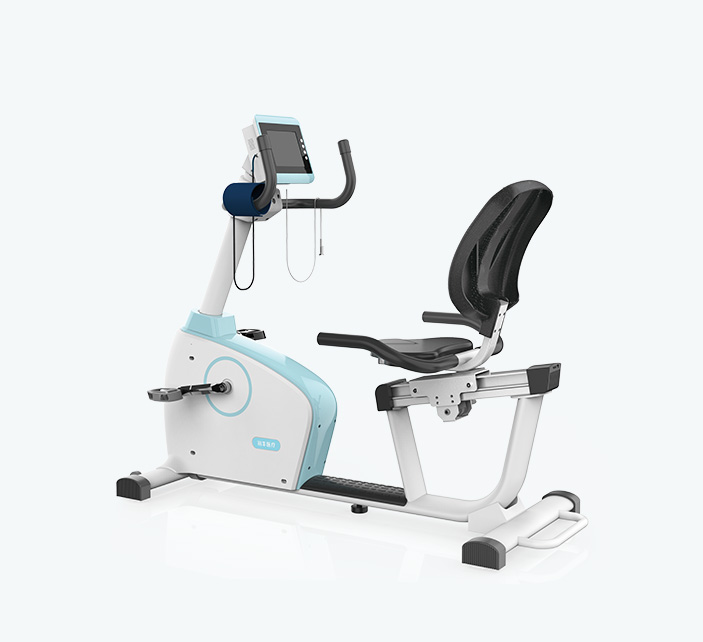
Horizontal Bicycle Ergometer
- Workload precisely adjustable from 5–999 watts in 1-watt increments with error rate < 2%; workload independent of pedaling speed
Pedaling speed: 30–130 rpm; infinitely adjustable seat position forward and backward to accommodate various body types
Maximum weight capacity: 200 kg; recumbent ergonomic design reduces loading on the spine and knee joints
Compatible with central monitoring systems for real-time ECG, blood pressure and SpO₂ monitoring with abnormal vital sign alerts
Supports multi-mode exercise prescriptions for full cardiopulmonary rehabilitation from early to stable stages


Product Introduction
Class II medical certified device equipped with a microprocessor-controlled electromagnetic eddy current resistance system. Developed in accordance with ICF(International Classification of Functioning, Disability and Health) standards, its recumbent training posture reduces cardiac and joint loading. Specially designed for patients with limited mobility, elderly individuals and obese patients, it supports low-intensity, high-safety aerobic training throughout the full cycle of cardiopulmonary rehabilitation.
Product Advantages
Recumbent design is spine- and knee-friendly
ideal for overweight, mobility-impaired and elderly patients
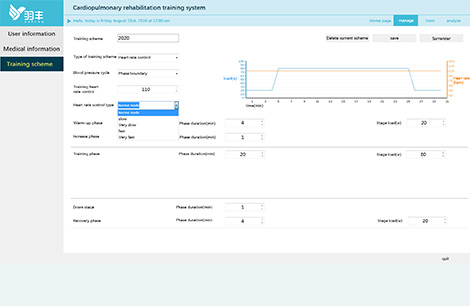
Medical-grade precise and stable workload enables quantifiable training outcomes
meeting professional rehabilitation standards
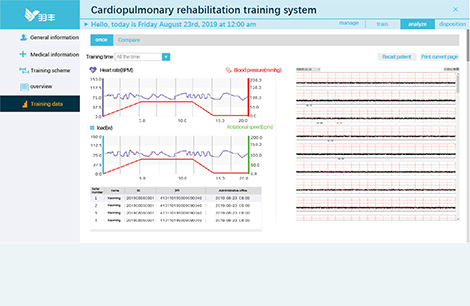
Real-time integration with monitoring systems enhances safety during low-intensity training
and improves patient compliance
Simple operation with minimal exertion required
suitable for patients with poor cardiopulmonary function and limited limb mobility
Stable performance and low noise
suitable for outpatient clinics, wards and rehabilitation departments

Main Indications
-
Rehabilitation for elderly patients with cardiopulmonary diseases
aerobic training for obesity complicated with hypertension / diabetes
-
Early low-intensity rehabilitation after myocardial infarction / cardiac surgery
cardiopulmonary training for stable heart failure
-
Cardiopulmonary rehabilitation for patients with lower extremity joint injuries
and limited mobility, avoiding lower extremity weight bearing
-
Low-intensity aerobic training for respiratory diseases such
as COPD and pulmonary fibrosis
-
Basic functional activation for patients with poor
cardiopulmonary endurance who are unable to train in standing position
Applicable Departments

Cardiovascular Department

Respiratory Department

Rehabilitation Medicine

Geriatrics

Endocrinology Department

ICU/CCU