

News
Why has peaceful sleep become a rare happiness hard to come by for modern people?
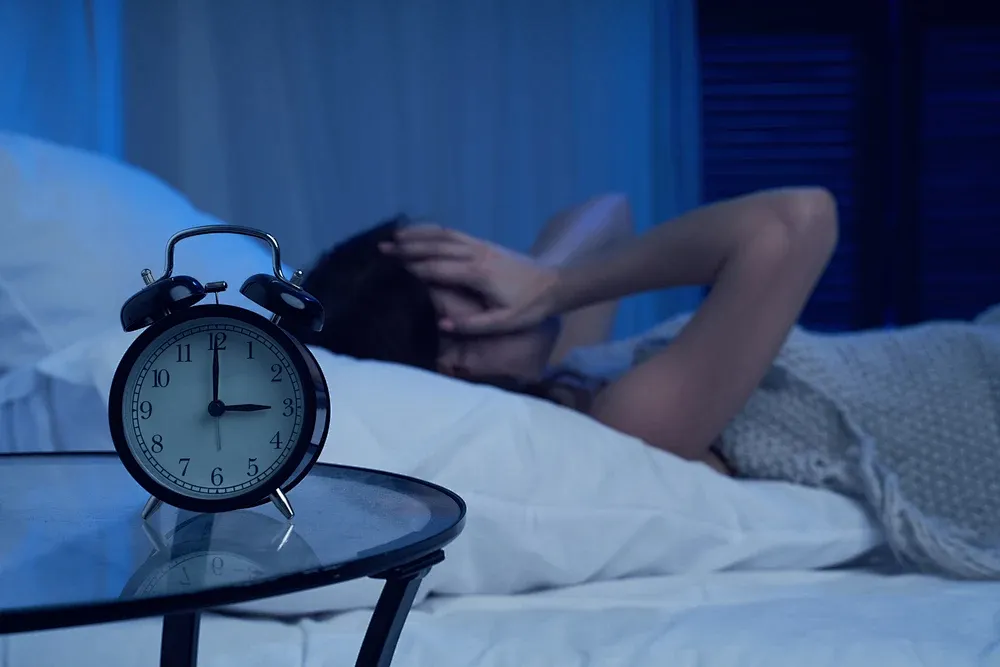
Lying in bed late at night, you stare blankly at the ceiling with the faint glow of your phone casting shadows across your face. Your body is utterly worn out, yet your mind races nonstop. You’ve tried every trick imaginable—counting sheep, playing white noise, taking melatonin—but getting a solid, restful night’s sleep remains an elusive struggle.
You are never alone in your struggle with insomnia.
Data from the 2025 China Sleep Health Survey Report released by the Chinese Sleep Research Society shows that the incidence of sleep disorders among adults aged 18 and above in China reaches 48.5%, meaning nearly one in every two adults suffers from sleep troubles. The incidence of insomnia among adults stands at 38.2%, ranking first among all sleep disorders. More alarmingly, around 150 million people are in need of sleep intervention, and sleep dysfunction is increasingly spreading among younger generations.
Insomnia Is Far From Trivial, Its Harms Exceed Public Perception
Many people dismiss insomnia as a minor issue, assuming it will resolve itself if they simply endure late nights. Yet the physical and mental toll caused by chronic sleep deprivation is far graver than most people realize.
In its early stages, insomnia directly impairs daytime functioning, leaving people persistently fatigued, unable to concentrate, and drastically lowering work and study efficiency. If left unaddressed over time, cognitive capacity gradually deteriorates, with frequent forgetfulness, slow reaction times and muddled thinking becoming commonplace. As insomnia worsens, emotional well-being steadily declines, multiplying the risk of developing mental illnesses such as anxiety and depression.
Chronic insomnia not only triggers daytime lethargy and volatile moods but also erodes cognitive function and raises the odds of developing various chronic illnesses. It is an invisible hazard lurking in daily life that slowly undermines physical health. Relevant research data reveals that sleep dysfunction is the primary trigger prompting the first medical consultation for 68% of anxiety disorder patients and 45% of Alzheimer’s disease patients.

Relying on Sleeping Pills Only Alleviates Symptoms Instead of Tackling the Root Cause and Cannot Be Used Long-Term
When plagued by insomnia, taking sedative-hypnotic drugs is the first choice for many people. Though such medication can induce sleep quickly, it comes with undeniable side effects. Long-term use easily leads to drug dependence and triggers aftereffects such as daytime drowsiness and slowed cognition. For this reason, most patients are reluctant to rely on medication for sleep aid over an extended period.
Cognitive Behavioral Therapy for Insomnia (CBT-I) is currently recognized clinically as the first-line non-pharmacological intervention. It reshapes the body’s natural sleep rhythm through measures including sleep duration management and standardized sleep environment adjustments. However, this therapy requires a lengthy course of treatment, and it may temporarily impair daytime cognitive function in the early intervention stage, making it hard for many people to complete the full treatment cycle.
Is there an innovative sleep-aiding solution that carries no risk of drug dependence, is gentle, safe and non-invasive?
Transcranial Direct Current Stimulation Technology: Gentle Microcurrent Regulation for Soothing the Brain
The non-invasive neuromodulation technology of transcranial direct current stimulation (tDCS) has drawn extensive attention from clinical researches in the field of insomnia intervention.
Cognitive Behavioral Therapy for Insomnia (CBT-I) is currently the clinically recognized first-line non-pharmacological intervention. It restores the body’s natural sleep rhythm via methods such as sleep duration management and standardized sleeping environment optimization. Nevertheless, this therapy demands a long treatment cycle, and it may temporarily impair daytime cognitive performance in the early intervention phase, discouraging many patients from finishing the full course of treatment.
Its working principle is easy to understand: matched electrodes deliver a constant weak current of 0 to 2 milliamperes to target brain regions. The intracranial microcurrent modulates the excitability of cerebral neurons to achieve positive regulation of brain functions. Simply put, mild microcurrents adjust the brain areas responsible for sleep control and repair disrupted sleep cycles.
Abundant Clinical Studies Verify the Practical Effects of tDCS on Improving Sleep
Numerous authoritative clinical trials have fully validated the practical value of transcranial direct current stimulation (tDCS) in sleep improvement:
1. Alleviate Physical and Mental Discomfort Accompanying Insomnia
Resting-state brain functional imaging studies on insomniacs have confirmed that the hippocampal function of people with sleep disorders is generally impaired. tDCS intervention can relieve multiple symptoms including insomnia, anxiety and depression, as well as activate the operation of the brain’s glymphatic system.
2. Comprehensively Improve Overall Sleep Quality
A randomized double-blind controlled trial targeting patients with severe depression complicated by insomnia showed that all scores on the Pittsburgh Sleep Quality Index (PSQI) were significantly improved among participants receiving tDCS intervention. Polysomnography data also indicated extended total sleep time and markedly elevated sleep efficiency.
3. Extend Effective Sleep Duration and Reduce Nocturnal Awakenings
A meta-analysis synthesizing multiple studies concluded that this technology can prolong total sleep time, boost sleep efficiency, cut down the frequency of nighttime awakenings, and relieve daytime drowsiness and fatigue.
4. Optimize the Architecture of Light and Deep Sleep
Relevant experiments demonstrated that slow-oscillation tDCS increases sleep efficiency by 9±7%, and raises the probability of the brain transitioning from Stage 2 light sleep to Stage 3 deep sleep by 20±17.8%.
5. Simultaneously Ease Anxiety and Depressive Moods
Multiple controlled studies have proven that tDCS does not merely improve sleep; it also alleviates anxiety and low mood concurrently. Emotional dysregulation is the root cause of most insomnia cases.

Four Core Advantages Stand Out Compared with Traditional Intervention Methods
Transcranial Direct Current Stimulation boasts multiple unique strengths when compared with pharmaceutical sleep aids:
Non-invasive and Safe
External intervention is performed via fixed electrodes attached to the head, with zero invasion and no wounds throughout the whole process.
Long-lasting Improvement
The beneficial regulatory effects on the brain generated by intervention last at least several hours, and can remain stable for 6 to 12 months at maximum.
Portable and Flexible
The whole device adopts a lightweight handheld design, free from site restrictions.
Multi-mode Compatibility
Supports multiple stimulation modes including tDCS, tACS, tPCS, tRNS and CES to meet diverse intervention demands.
Precise Targeted Regulation
Innovative annular focusing technology accurately locks target brain regions, compatible with a wide range of intervention targets.
Yufeng Medical Transcranial Direct Current Stimulator
Relying on cutting-edge neuroscience technology to improve sleep from the root of brain dysfunction
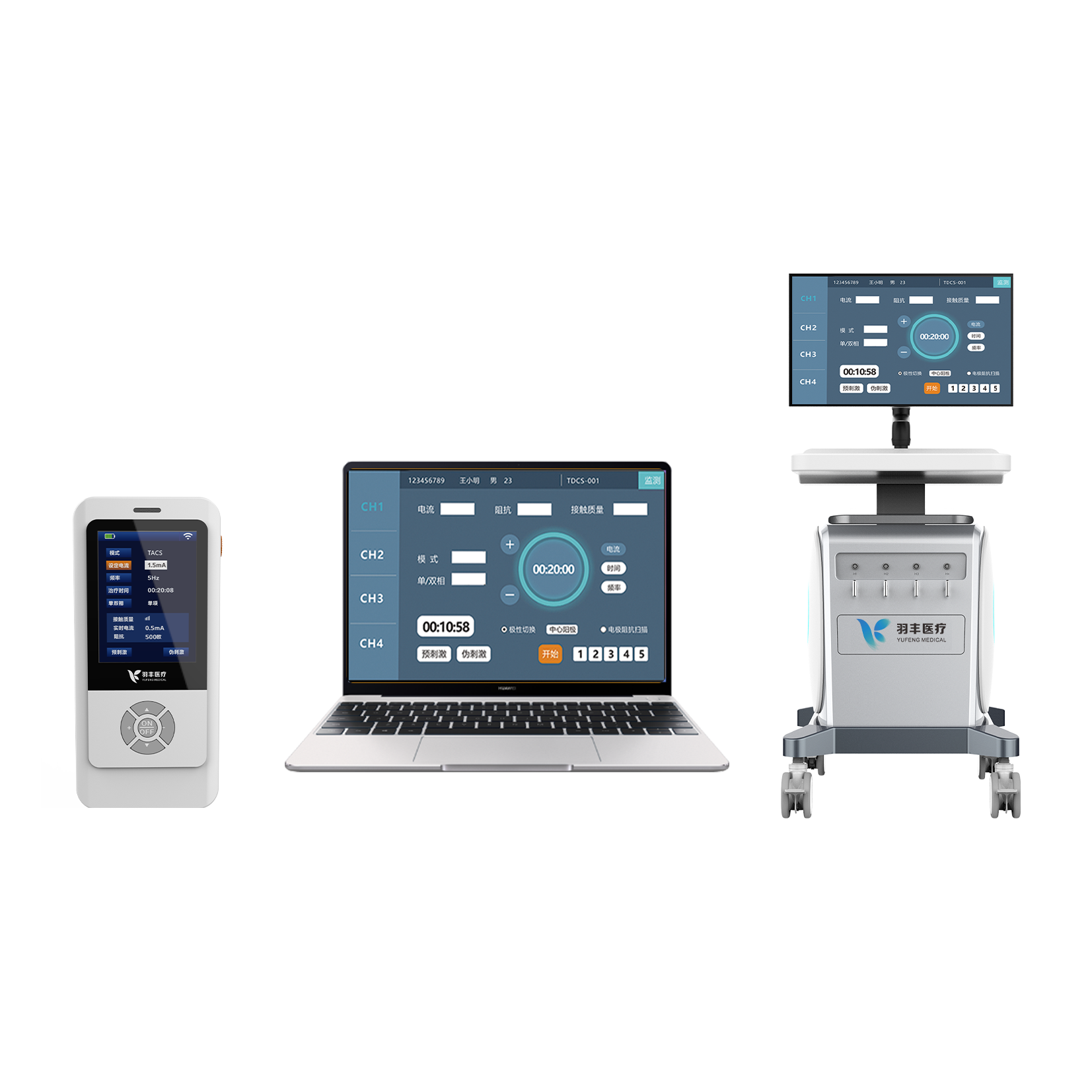
Yufeng Medical Transcranial Direct Current Stimulator
Crafted with mature tDCS neuromodulation technology, this professional clinical device is developed by Yufeng Medical.
The basic model is equipped with dual-channel anode and cathode output. Users can customize stimulation modes via the matched control software, delivering mild polarizing direct current to the cerebral cortex.
The high-precision upgraded version features five-channel output, supporting two electrode combinations: one anode with four cathodes, and one cathode with four anodes. It delivers drastically enhanced targeting accuracy, enables longer-lasting and stable modifications to brain neuroplasticity, and achieves superior intervention outcomes compared with similar neuromodulation devices.
Sleep acts as the first line of defense for physical health and an essential demand for physical and mental recovery. Chronic insomnia drains far more than a single night’s rest — it impairs immunity, memory, emotional well-being and long-term physical fitness. There is no need to endure recurring sleep troubles alone. Transcranial direct current stimulation adopts a safe, non-invasive and scientific neuromodulation approach to restore the brain’s natural sleep rhythm and help users regain high-quality deep sleep. A sound night’s sleep is not an extravagant luxury, but a fundamental way to fend off exhaustion, protect physical and mental health, and treat yourself well in the long run.