

News
Yu Feng Medical sincerely invites you to the 2026 Children’s Rehabilitation Academic Conference
01 Conference Dates
July 1–5, 2026
02 Venue
Xi’an Jinjiang International Hotel
Address: No. 6 West Section of Eurasia Avenue, Chanba Ecological Zone, Weiyang District, Xi’an, Shaanxi Province
03 Main Objectives
To promote the prosperity and development of pediatric rehabilitation medicine, strengthen academic exchanges and cooperation across related professional fields, elevate the overall level of pediatric rehabilitation services, and further advance the renewal of pediatric rehabilitation concepts and technological development.
Jointly organized by the Professional Committee on Cerebral Palsy and Developmental Disorders Rehabilitation of the China Disabled Persons’ Rehabilitation Association and the Professional Committee on Pediatric Cerebral Palsy of the World Federation of Chinese Medicine Societies (WFCMS), and co-organized by the Pediatric Rehabilitation Professional Committee and the Autism Rehabilitation Professional Committee of the Chinese Association of Rehabilitation Medicine, the following conferences will be held in Xi’an, Shaanxi Province from July 1 to 5, 2026:
20th Academic Annual Meeting of the Professional Committee on Cerebral Palsy and Developmental Disorders Rehabilitation, China Disabled Persons’ Rehabilitation Association
9th Academic Annual Meeting of the Professional Committee on Pediatric Cerebral Palsy, WFCMS
13th Academic Exchange Conference of the Pediatric Rehabilitation Professional Committee, Chinese Association of Rehabilitation Medicine
2026 Academic Exchange Conference of the Autism Rehabilitation Professional Committee, Chinese Association of Rehabilitation Medicine
04 Schedule
July 1 (Wed): Registration for Skills Competitions
July 2 (Thu): Skills Competitions (Rehabilitation Physician Contest, Rehabilitation Therapist Contest, Science Popularization Contest)
July 3 (Fri): General Registration, Skills Competitions, Committee Working Meetings
July 4 (Sat): Opening Ceremony, Main Forum, Parallel Forums
July 5 (Sun): Parallel Forums, Closing Ceremony
Detailed agenda will be released in the second circular.
Yufeng Exhibits
Pediatric Vibration Training Device
Vibration Training Device – Separable Type

Operating Frequency: Vibration frequency of the platform: 5–30 Hz
Output Amplitude: Alternating left-right vibration with amplitude: 0–4.5 mm
Timer Function: Adjustable timer, 1–10 min continuous adjustment, step: 5 s
Pediatric Vibration Coaching System

Developed based on pediatric kinematic principles and sports medicine, with a full set of vibration‑based exercises addressing all musculoskeletal issues in children (excluding the head)
Over 40 exercise movements
Movements categorized into upper limb, lower limb, core strength, and full‑body
Equipped with a movable TV stand
Equipped with a large‑screen display
Vibration Training Device – Pediatric Standing Bed
11.png)
Operating Frequency: Vibration frequency of the platform: 5–30 Hz
Output Amplitude: Alternating left-right vibration with amplitude: 0–4.5 mm
Timer Function: Adjustable timer, 1–10 min continuous adjustment, step: 5 s
Standing Bed Angle: 0–90° adjustable
Adolescent Scoliosis Rehabilitation Solution
Intelligent Scoliosis Screening System

Paperless Screening: Eliminates cumbersome manual entry, measurement, and statistics of paper screening forms; enables full electronic spine screening. Information can be pre‑entered via QR code on a wireless client or imported via Excel in advance, with data synchronized to the backend system.
Multi‑Mode Screening: The intelligent electronic spine scaler supports both sequential and random screening.
Portable Screening: The device weighs only 400 g. Each screener can carry one handheld unit to complete mass screening without additional tools (e.g., computers, carts), no extra entry or post‑screening statistics required.
Intelligent Data Statistics: The intelligent data management platform supports screener and user management, automatically generates screening profiles and intelligent data analysis, and supports research, big data white papers, and academic papers.
Intelligent Posture Analysis System

Multi‑Dimensional Assessment: 3D human posture analysis provides comprehensive body measurement data and multi‑dimensional health risk evaluation.
Precise Data: Leverages big data samples and efficient AI algorithms for high‑quality analysis.
Fast & Accurate: Real‑time identification and automatic marking of 45 skeletal key points, replacing manual marking.
Intuitive & Understandable: Assessment results presented as visual charts for clear posture issue identification.
Scientific & Flexible: Supports manual correction of automatically identified skeletal key points to ensure accuracy and personalization.
Intelligent Prescription: Generates personalized exercise prescriptions in real time based on test results.
Plantar Pressure Analysis System

Equipped with high‑sensitivity aerospace‑grade array sensors in a fence matrix design, supported by medical and sports analysis algorithms. Provides parameters including plantar pressure distribution, arch type analysis, etc. Easy to operate with readable reports.
Precise Static Plantar Pressure Data Collection:
COP (Center of Pressure) changes during single‑leg standing
Forefoot vs. hindfoot force comparison
Arch type analysis
Body stability analysis
Walkway Gait Analysis System

Equipped with high‑sensitivity aerospace‑grade array sensors in a fence matrix design, supported by medical and sports analysis algorithms. Provides parameters including plantar pressure distribution, arch type, walking pattern, gait phase, stability analysis, etc. Easy to operate with readable reports.
Intelligent Walkway: Collects static plantar pressure and dynamic gait data
Multi‑OS Support: Compatible with local Windows PC and cloud‑based Android systems; supports static/dynamic data viewing and report generation
Whole‑Body Vibration Training System

Product Features
Alternating left‑right tilting vibration mode
Multiple amplitude options (0–4.5 mm)
High repetition rate in short duration
Product Advantages
Minimal impact on the head
Amplitude adjustable via foot positioning; higher amplitude = stronger stimulation and greater muscle stretch in the same time
Higher training efficiency than conventional training
Scientific Weight Management for a Healthy Lifestyle
Cardiorespiratory Fitness (CRF)

CRF is a “barometer” of health, reflecting the integrated efficiency of cardiac pumping, pulmonary gas exchange, blood circulation, and muscle oxygen utilization. It measures the body’s maximum capacity to take in, transport, and use oxygen during exercise and can be significantly improved through scientific training.
Cardiopulmonary function testing and training are non‑invasive, fast, accurate, and efficient methods for evaluating cardiopulmonary reserve, exercise endurance, and guiding scientific training.
Aerobic Training

Epidemiological studies show aerobic training is the foundation for adults with or at risk of cardiovascular disease and the most effective way to improve cardiopulmonary function.
Systematic aerobic and high‑intensity interval training significantly enhances cardiopulmonary reserve, boosts basal metabolic rate, promotes fat oxidation, optimizes body composition, supports weight management, and reduces the risk of obesity‑related metabolic diseases.
Vibration Training
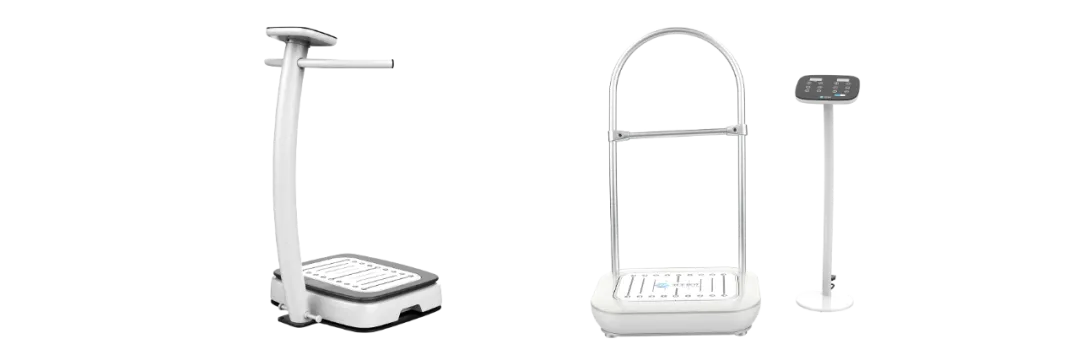
Designed based on human gait principles, the vibration trainer simulates pelvic tilting during walking. At frequencies above 12 Hz, it triggers physiological muscle stretch reflexes, efficiently activating lower‑body and trunk muscles. It improves muscle coordination, balance, blood circulation, and metabolism, aiding weight management by increasing basal metabolism and fat burning. Adjustable frequency, amplitude, and posture enable personalized programs, ideal for low‑impact, high‑efficiency exercise.
Resistance Training
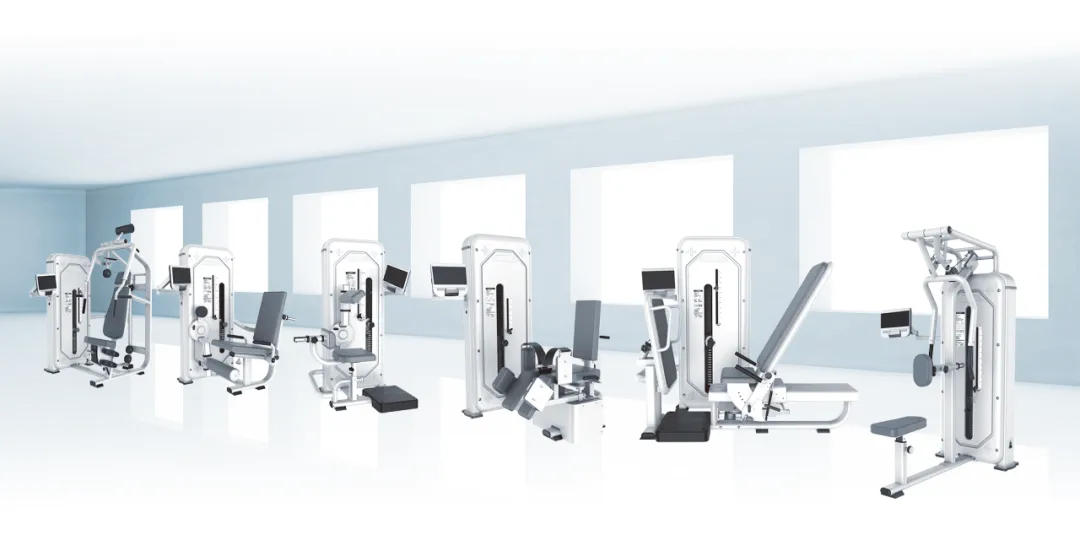
Resistance training uses isotonic contractions against external resistance to activate major muscle groups. Moderate‑intensity sets (10–15 reps) increase muscle strength, endurance, and mass, raising basal metabolic rate. It optimizes body composition (lean mass gain, fat loss), providing dual benefits for weight management: immediate calorie burn during training and long‑term fat loss via elevated resting metabolism.
Transcranial Direct Current Stimulation (tDCS) Device

A non‑invasive neuromodulation technology using constant, low‑intensity current (0–2 mA) to regulate neural activity. Current is delivered via electrodes to targeted brain regions, increasing or decreasing neuronal excitability (depending on polarity) to alter brain function for treatment or research.
Features
Multiple Modes: tDCS, tACS, tPCS, tRNS, CES
High Precision Output: Breakthrough circular focusing technology for precise targeting and richer target selection, improving therapeutic outcomes
Long‑Term Benefits: Effects last from hours to 6–12 months
Safe & Non‑Invasive: Auxiliary head electrode fixation, non‑invasive
Flexible & Portable: Lightweight handheld terminal, location‑independent
3D Spiral Vibration Therapy

Advanced 3D spiral vibration technology uses a motor‑driven eccentric rotor to generate mechanical vibrations at precise frequencies. Under precise damping control, vibrations are transmitted to the treatment head, creating horizontal and vertical force components. It significantly improves blood circulation and lymphatic drainage, with excellent efficacy for pulmonary clearance, edema, sports injuries, non‑healing wounds, and musculoskeletal pain.
Product Features
Deep Penetration: Harmonic effect enables long‑distance, deep, large‑area vibration transmission
Low Amplitude: Gentle muscle contractions via mechanoreceptors ensure effective stimulation
Safety: Low‑intensity vibration within physiological limits, no tissue damage risk
Multiple Benefits: Enhances pulmonary blood flow and respiratory function while clearing sputum